Texture hallucination
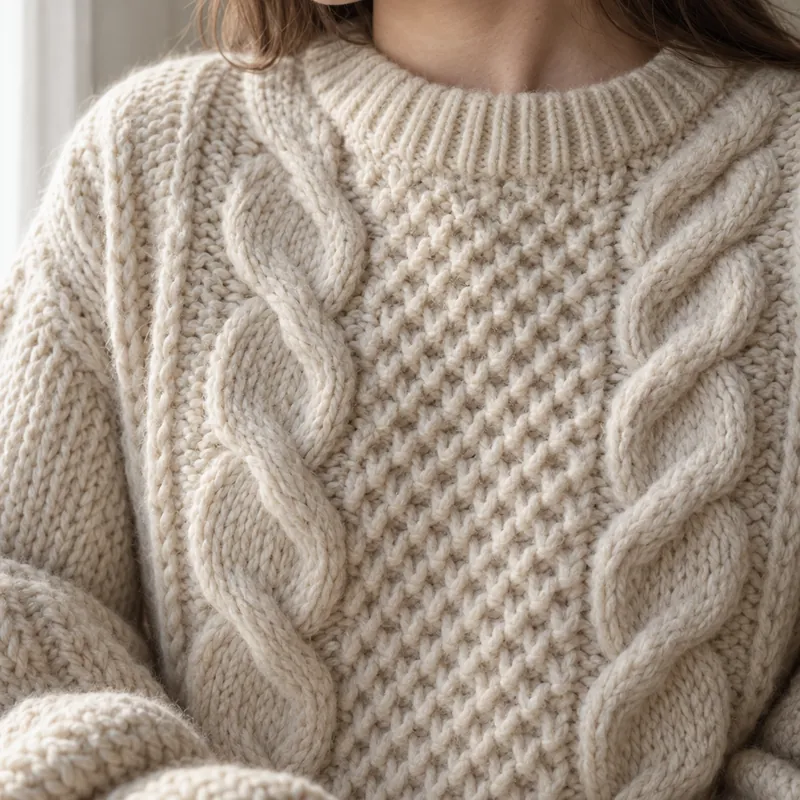
Texture hallucination is a failure where a generated image shows a fabric surface the product does not have: a cable knit rendered smooth, a flat weave given a sheen, or a denim wash invented instead of copied.
Texture hallucination gives a fabric a surface it does not have. It is common because generators work on a compressed version of the image, and research on virtual try-on notes that this compression loses fine garment textures. Detail that was never captured gets filled in with something plausible.
Where it shows up
- Knitwear: cable, rib and waffle structures smoothed flat, or replaced by a generic knit.
- Denim: an invented wash, fading or whiskering that differs from the product.
- Sheen: matte fabrics rendered glossy, or satin rendered flat.
- Surface detail: bouclé, corduroy wales, quilting and embroidery simplified or redrawn.
How to catch it in review
Zoom in where customers zoom in: the fabric close-up and the chest area of the main image. Compare with a detail reference taken in raking light, which shows texture better than flat studio light.

How to prevent it
- Add texture close-ups to the references for every textured product, lit so the structure is visible.
- Treat denim washes as unique: a wash is a pattern, not a colour, and it has to come from the reference image.
- Prefer shots where the texture is large enough in the frame to be rendered, and add a dedicated detail shot.
Part of garment fidelity. Related: print drift.