Print drift
Print drift is a failure where a garment's print or pattern changes in a generated image: a different scale, a shifted placement, a simplified repeat, or a pattern replaced by a similar one.
Print drift happens when a generated image keeps the idea of a print but not the print itself. The garment still reads as "floral" or "striped", so it passes a quick look, but the customer who compares it with the product in hand sees a different pattern.
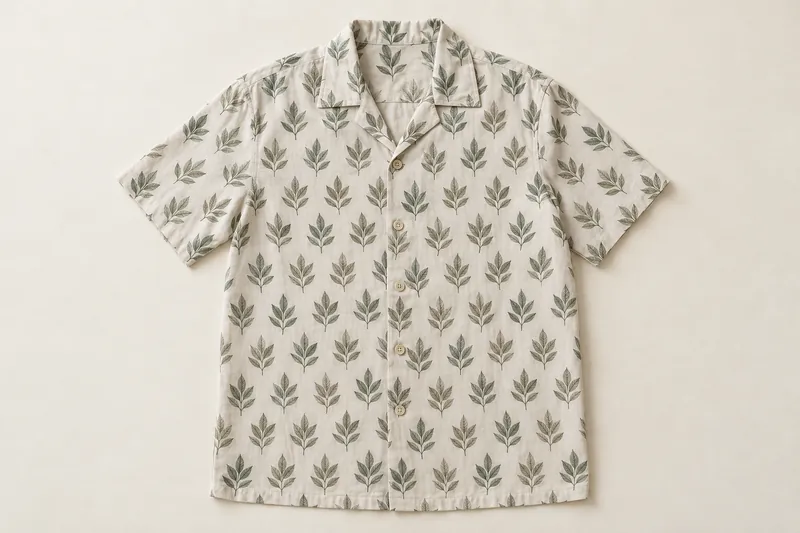
Forms it takes
- Scale: a small repeat rendered large, or the reverse.
- Placement: a placed print moved, mirrored or cropped differently on the body.
- Simplification: fine detail in the pattern smoothed away.
- Substitution: a similar but different pattern, often a more generic version of the original.
- Stripes and checks: lines that stop matching at seams, or change width across the garment.
How to catch it in review
Put the image next to a flat reference of the print and compare one recognisable motif: its size relative to a button or a seam, its position on the chest or hem, and its details. For stripes and checks, follow a line across a seam.
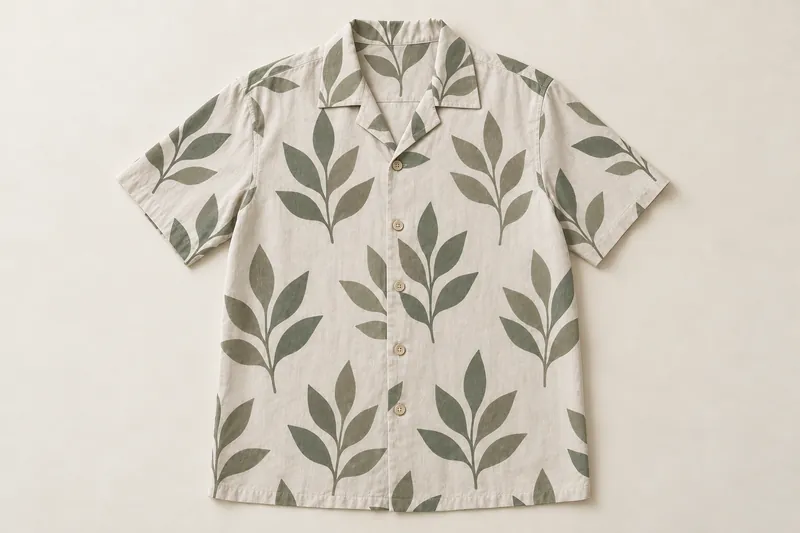
How to prevent it
- Include a close-up of the print at true scale in the references, next to the full packshot.
- For placed prints, add a reference that shows exactly where the print sits on the garment.
- Treat printed categories as a separate review queue; they fail more often than plain ones.
Part of garment fidelity. Related: logo distortion, texture hallucination.