Acceptance rate
Acceptance rate is the share of generated fashion images that pass review and can be delivered without changes. Its inverse, generations per accepted image, shows how much production and review effort one usable image costs.
Vendor showcase galleries rarely state their acceptance rate: they show the images that worked, without the attempts behind them. Measure it yourself, per product category, in a pilot and on every batch after that.
How to measure it
Acceptance rate = images accepted in review / images generated.
Generations per accepted image = images generated / images accepted.
Count an image as accepted only when it passes the full review: garment fidelity, character consistency, anatomy, background and crop. An image that needs a retouch before delivery is not accepted yet. If a partner reviews before delivery, track a second rate as well: the share of delivered images your own team accepts.
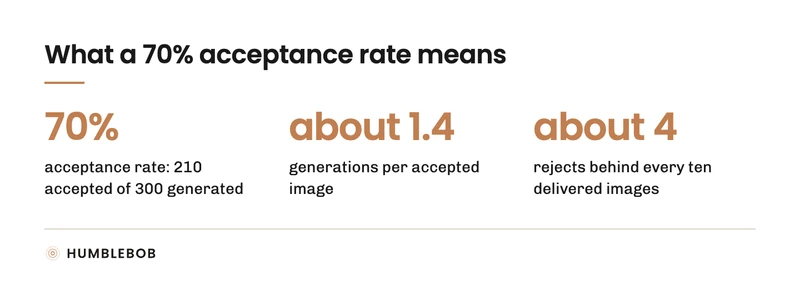
Say 300 images are generated and 210 accepted: the acceptance rate is 70%, or about 1.4 generations per accepted image.
What moves it
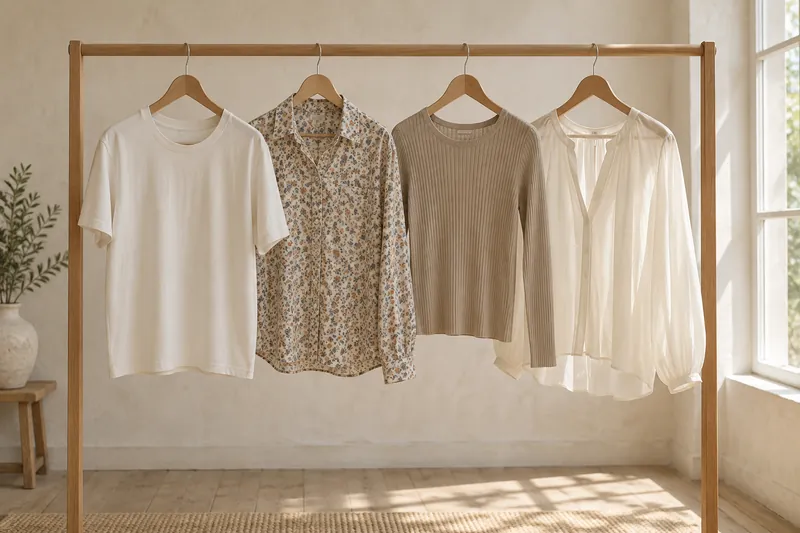
- Garment complexity. Prints, logos, fine knits and sheer fabrics lower it. Plain tops raise it.
- Reference quality. A sharp, evenly lit packshot with detail close-ups beats a phone photo with a colour cast. See product references.
- Shot type. Back views, three-quarter views and close-ups tend to fail more often than front views, because they show less of the face or more detail than the references cover.
- Review strictness. A lenient review raises the rate and moves the failures to your customers.
Why it matters
Every rejected image has already used a generation and a reviewer's time. At 70%, about four rejects sit behind every ten delivered images. Who pays for them depends on the pricing: a vendor that charges per delivered image builds them into its price and carries the risk of a bad batch; a tool that charges per generation passes it to you. Cost per accepted image puts a euro figure on them.