Journal / Models
How to keep the same model across a whole collection
Why generated fashion models drift between images, and the production steps that keep one face, skin tone and body identical across hundreds of products.
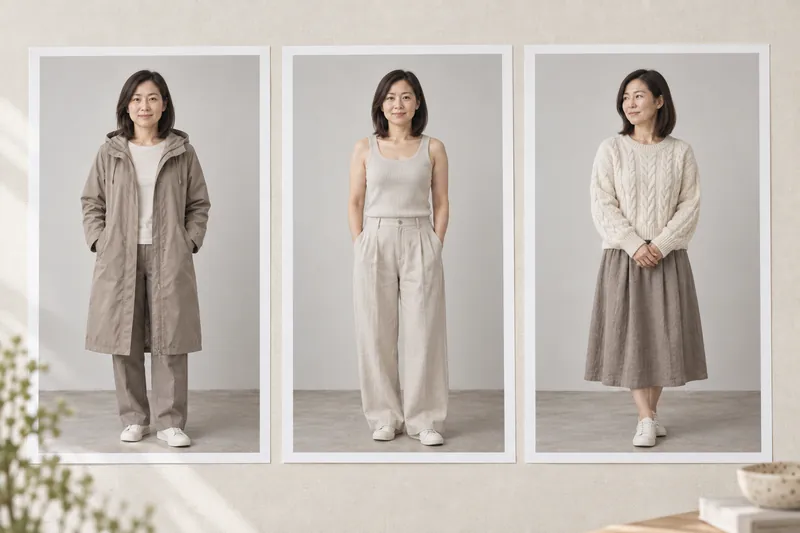
For a clothing brand, a consistent model means that a customer scrolling from the first product to the three-hundredth sees one person, with the same face, skin tone, build and hair in a back view as in a front view, and in a parka as in a tank top. Generated images drift unless the identity is fixed as a set of approved reference images and every new image is checked against it. A good description in the prompt is not enough, and neither is a lucky seed.
Read the video as text
Same face, image 1 to image 300. Back and three-quarter views drift most. Hoods and high collars pull the face with them. A drifted image is made again, not patched. Approve the model like a casting. From the HUMBLEBOB Journal.
Most advice on consistent AI models is written for creators, influencers and game artists, where a face that is roughly the same across a dozen posts counts as a success. A product catalogue is a harder test. The images sit next to each other in a grid, and customers compare them. When J.Crew published generated images for a collaboration in 2025, people online spotted faces that changed from one image to the next and clothing marks that moved between photos. Zalando now treats that kind of drift as grounds for rejection: its image guidelines list "inconsistent facial features, body proportions and skin tones across the same model image set" as an unacceptable distortion in AI-generated images.
What drifts
In a review of generated product images, identity drift tends to show up in five places:
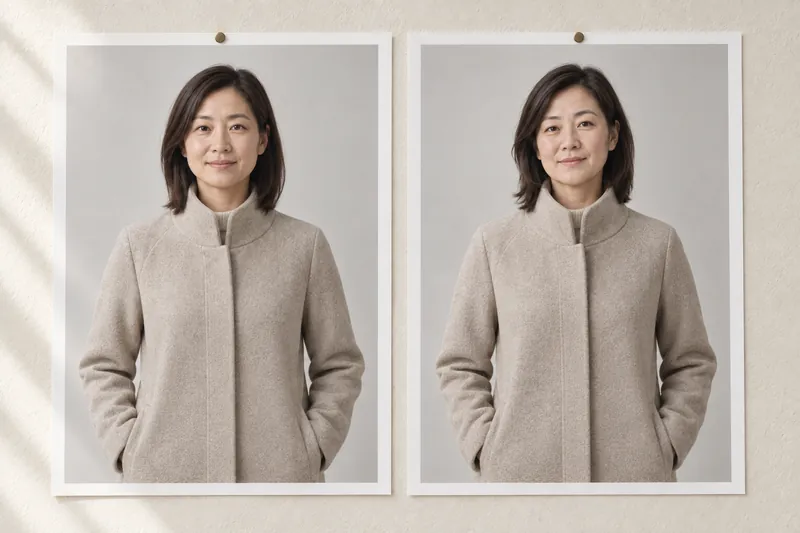
- Face structure: eye spacing, jaw line, nose width. Small changes that add up to "a sister" rather than the same person.
- Age: the model looks 24 in one image and 31 in the next, often because of lighting or a heavier garment.
- Skin tone: shifts with the light and the colour of the garment next to the face.
- Hair: length, parting and hairline change between front and back views.
- Body proportions: shoulder width, height and build change with the garment, especially with oversized fits and outerwear.
The garment itself is often the cause. A hood, a high collar or a strongly coloured knit near the face pulls the identity with it. So does the shot type: back views and three-quarter views drift more than front views, because there is less of the face for the generator to hold on to.
Why it happens
Image models do not remember people. Every image starts from random noise, which the generator shapes towards what its instructions and references describe. The documentation for the widely used Diffusers library puts it plainly: diffusion "generates a different output every time", and even an identical seed does not guarantee an identical result.
Text is a weak anchor. A description like "woman, late twenties, dark shoulder-length hair" fits millions of faces, and the generator picks a different one each time. Google's DreamBooth paper named the gap in 2022: text-to-image models lack the ability to reproduce a specific subject from a set of reference images. Methods have improved a lot since then, and as recently as August 2025, a major model provider's launch post for its image model listed "even more reliable character consistency" as work in progress.
Drift also compounds. Each edit of an already edited image moves the identity a little further, which is why a 2025 image-editing benchmark measures consistency over several editing rounds. That is why, in Step 3, a drifted image goes back to the reference and is made again.
Step 1: approve the identity as a set of reference images
Treat it like casting. Before any product is shot, build a reference set of the identity: front, profile, three-quarter, close-up, full body, and a movement pose. The brand reviews that set the way it would review a casting, and the approved set becomes the reference for everything that follows.
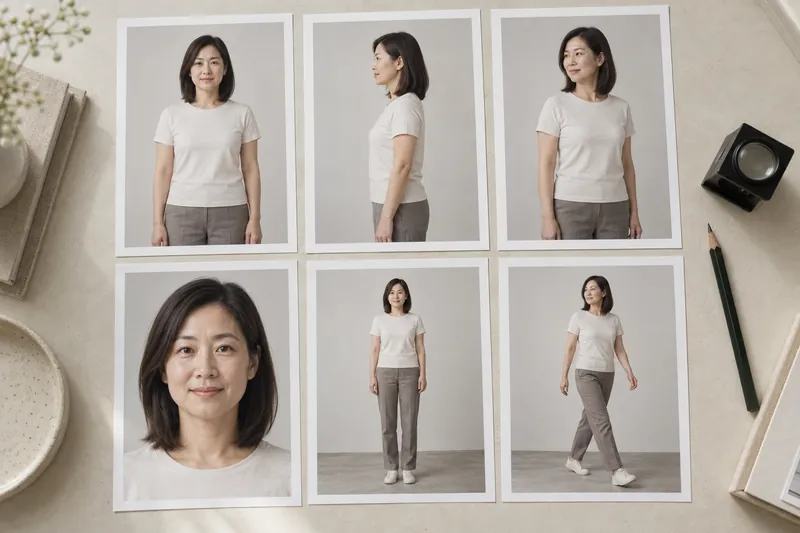
Include the body as well as the face: height, build, and which sample size the model represents. A model approved from a head shot alone tends to drift the first time a long coat goes on.
Step 2: decide what may change and what may not
Write down two lists.
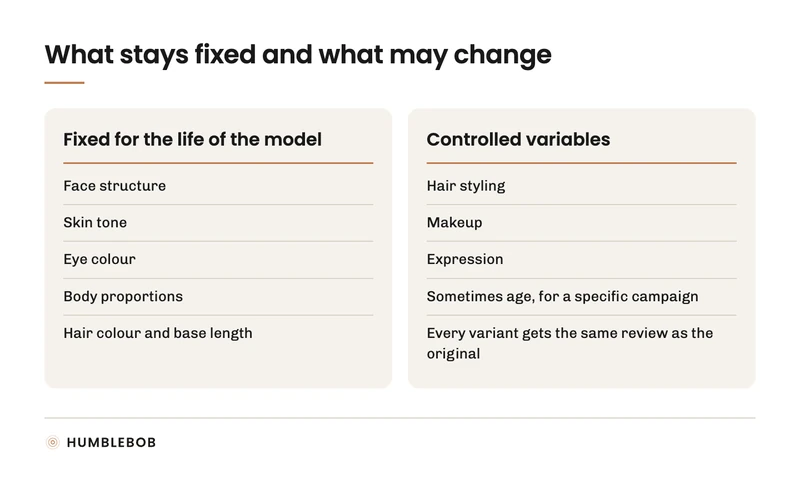
Fixed for the life of the model: face structure, skin tone, eye colour, body proportions, hair colour and base length.
Controlled variables: hair styling, makeup, expression, and sometimes age for a specific campaign. Each variant is a deliberate update to the approved base, and it goes through the same review as the original. Anything that is not on the second list is on the first.
Step 3: check every image against the reference
Compare every image side by side with the approved reference set before it is delivered. Review each face at full size, and look at back and side views with extra care. When an image drifts, replace the whole image instead of patching the face. A retouched face rarely matches the light on the rest of the body, and the patch tends to show once the image is enlarged on a product page.
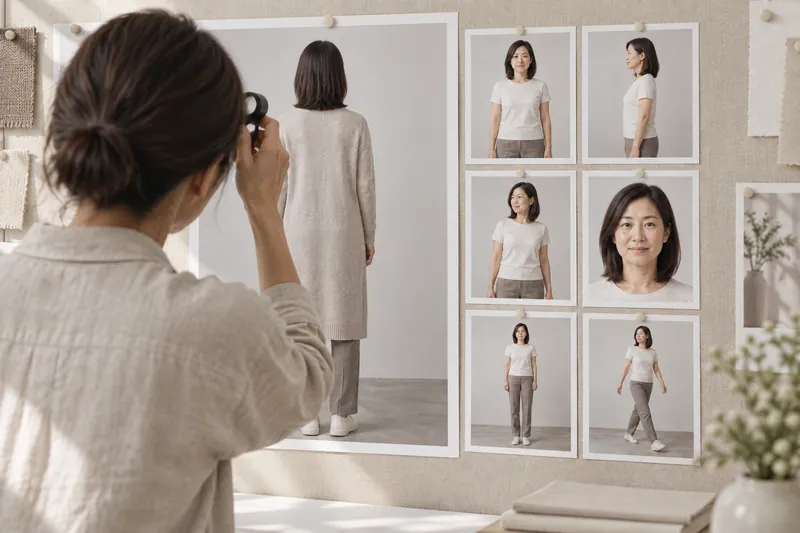
Keep a count of rejections per model and per shot type. If one model fails more often on three-quarter views, the reference set is missing an angle, and it is cheaper to fix the reference than to keep rejecting images.
Step 4: build a small roster per segment
One model for an entire range looks odd on a category page. Twenty models dilute the brand. Most brands need a small roster per segment, with a clear rule for which model wears which category, so the same person shows up across a customer's browsing session. Plan the roster from the customers and product categories you have: menswear and womenswear, kids by age band, plus size, tall, or whatever your range needs.
Digital twins of real models
Some brands start from a real person instead of a generated one. In March 2025 H&M announced digital twins of about 30 models, built with the Swedish company Uncut. The models own their twins and can license them to other brands, and H&M said they are paid whenever a twin is used. The first images appeared in July 2025. In December 2025 Zara confirmed it was using AI to show consenting models in more outfits, with pay that one model said matched a regular shoot, according to Reuters.
H&M's programme drew criticism anyway. The Model Alliance raised concerns about digital replicas without meaningful protections, and the UK performers' union Equity warned against a race to the bottom.
If you base a model on a real person, the contract has to cover the scope, the purpose, the pay and the duration of use. New York's Fashion Workers Act has required a model's clear written approval for a digital replica, with exactly those terms, since June 2025. In May 2026 a model sued a US retailer, alleging it had used AI to generate new images from an earlier shoot after the contract had ended. The retailer denied wrongdoing and the suit was later withdrawn, PetaPixel reported. Get the consent in writing before the first image.
A fully generated identity avoids consent contracts, although it is worth checking that the face does not happen to resemble a real, recognisable person. It does not avoid disclosure. In the EU, realistic generated people likely count as deep fakes under the AI Act's transparency rules, covered in our article on Article 50.
Consistency across seasons
An approved identity is an asset that outlives one drop. Store the reference set with the date of approval and the list of controlled variants, and reuse it next season. Customers who return to your site recognise the model, and your team skips a round of casting. When you do change a model, retire the old one on purpose, with a date, instead of letting a new face appear halfway through a category.
A short checklist
- The model was approved as a set of reference images covering every angle you shoot.
- Body proportions and sample size are part of the approval.
- There is a written list of what may change (styling, makeup, expression) and what may not.
- Every image is compared with the reference before delivery, at full size.
- Drifted images are made again from the reference.
- Each segment has a roster with a rule for who wears what.
- Reference sets are stored and dated, so next season starts from the same people.
Approved, reusable models are what HUMBLEBOB's Digital models service is built around: your models are cast in step 1 of How we work and appear in every image after that. If you are weighing generated models more generally, our checklist for AI models for clothing brands covers the other questions to ask.